I SPY HALLOWEEN Find and Count Activity: A Designer's Visual Toolkit
Imagine transforming a simple holiday theme into a powerful tool for visual engagement and skill development. The I SPY HALLOWEEN Find and Count Activity does exactly that, offering a unique blend of graphic design principles and interactive learning that captivates audiences of all ages.
The Visual Design Principles Behind the Activity
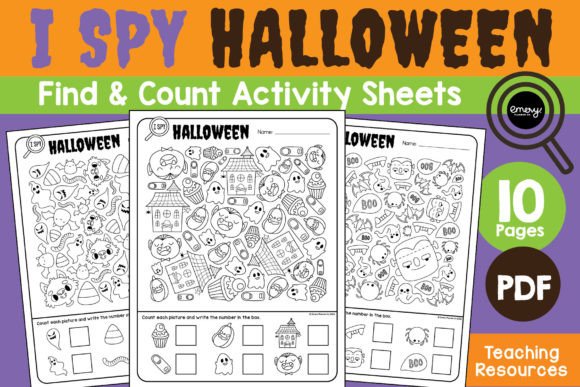
At its core, this activity sheet is a masterclass in visual hierarchy and composition. Each Halloween-themed illustration is intentionally placed to guide the viewer's eye through a carefully designed layout. The black-and-white format isn't just economical—it's a deliberate design choice that emphasizes contrast, negative space, and line work, allowing the focus to remain on pattern recognition and counting skills.
The included answer sheets demonstrate professional design workflow, providing a clear reference that maintains the visual language of the main activity. This consistency is crucial in any branding or design system, where every element must communicate the same visual message.
Practical Applications for Creative Professionals
While designed as an educational tool, the I SPY HALLOWEEN Find and Count Activity offers valuable insights for designers across multiple disciplines:
- Brand Identity Development: The consistent visual style across all ten sheets shows how to maintain brand cohesion while offering variety—a essential skill in logo design and brand system creation.
- Editorial and Packaging Design: The clear visual hierarchy demonstrates how to organize complex information into digestible, engaging layouts perfect for magazines, books, or product packaging.
- Digital Marketing Assets: These print-ready files (8.5x11 inches) translate perfectly to social media graphics, email campaigns, or website content that requires seasonal engagement.
- UI/UX Inspiration: The counting mechanism mirrors interactive elements in web and app design, where visual feedback and user engagement are paramount.
Typography and Composition in Practice
Though primarily visual, the activity relies on subtle typographic choices for instructions and labels. The clean, readable text demonstrates how typography should support rather than dominate visual content—a principle that applies directly to modern aesthetics in everything from presentations to merchandise design.
The composition balances busy Halloween elements with ample white space, creating a visual rhythm that prevents overwhelm. This approach mirrors current design trends that favor clean layouts with strategic visual density, making the activity both functional and aesthetically pleasing.
Integrating This Style into Your Design Workflow
For designers seeking to incorporate similar visual strategies into their projects:
- Start with a consistent color palette—even in black and white, varying line weights and textures create depth and visual interest.
- Establish clear visual pathways using size, placement, and contrast to guide the viewer through your content.
- Balance complexity with simplicity; alternate between detailed illustrations and clean space to maintain engagement without causing fatigue.
- Create complementary assets (like answer sheets) that reinforce your main design while providing additional value.
Beyond Halloween: Year-Round Design Applications
The principles demonstrated in this I SPY HALLOWEEN Find and Count Activity extend far beyond seasonal use. The same visual discrimination skills it develops apply to:
- Logo Design: Recognizing subtle variations in shapes and forms.
- Brand Audits: Identifying inconsistencies across marketing materials.
- Visual Content Creation: Developing engaging social media graphics that tell a story through imagery.
- Packaging Design: Creating products that stand out on shelves through distinctive visual elements.
Ultimately, this activity serves as a reminder that effective design isn't just about aesthetics—it's about creating meaningful interactions. Whether you're designing for education, marketing, or pure visual pleasure, the principles of clear hierarchy, consistent styling, and thoughtful composition remain timeless tools in any designer's arsenal. Quality creative assets like these demonstrate how functional design can also be beautiful, proving that even simple concepts, when executed with care, can elevate both communication and visual experience.