CVC Word Pop: A Design-Driven Literacy Tool
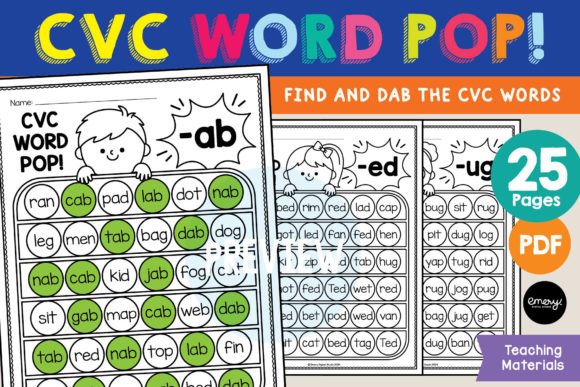
In the realm of educational design, the most effective tools are those that seamlessly blend pedagogical function with compelling visual engagement. The CVC Word Pop, Find and Dab CVC Words packet exemplifies this principle, transforming early literacy practice into a dynamic, tactile experience. For designers and educators creating learning materials, this resource offers a masterclass in how structured visual assets can enhance user interaction and knowledge retention, moving beyond simple worksheets to become integrated components of a branded educational ecosystem.
This packet's organization is a study in effective information architecture. By grouping 25 pages of activities by specific word families—from ab and ad to um and ut—it creates a logical, scaffolded learning journey. This structure mirrors best practices in UX design, where clear navigation and predictable patterns reduce cognitive load and empower the user. For a teacher assembling a literacy center or a parent guiding home practice, this intentional layout ensures the material is immediately usable and intuitively understood, a hallmark of professional presentation.
Practical Applications in Creative Projects
The true value of a well-designed asset lies in its versatility. The black-and-white, print-ready format of the CVC Word Pop worksheets provides a blank canvas for customization and integration into broader creative projects. Consider these applications:
- Brand Identity for Educational Products: Use the consistent page format as a template for a series of branded activity sheets, establishing a recognizable visual identity for your tutoring service or educational blog.
- Marketing Materials: Incorporate the engaging "pop and dab" mechanic into promotional graphics for back-to-school campaigns or literacy program flyers, demonstrating interactive learning in action.
- Digital Product Design: Adapt the core concept for a digital app or interactive PDF, where the "dabbing" action could be replaced with a click or tap, maintaining the user engagement principle.
- Packaging Design: The playful aesthetic could inform the packaging design for a physical kit of literacy tools, using similar dot graphics and clear, family-based labeling.
Evaluating and Implementing Design Elements
When selecting resources like this for your workflow, evaluate them with a designer's eye. The packet's visual hierarchy is clear: the instruction to "pop and dab" is the primary action, supported by the target words. This clarity is crucial for the end-user. To implement it effectively:
- Ensure Readability and Scalability: The 8.5x11 inch, high-contrast PDF ensures text remains crisp at print size. Always verify that any asset you use maintains this readability when scaled within your larger layout.
- Maintain Consistency: The uniform design across all 25 pages creates a cohesive experience. If you're building a suite of materials, use this as a benchmark for consistency in your own typography and spacing.
- Consider the Color Palette: While the pack is monochrome, the instruction to use dot markers, crayons, or gel pens invites a color palette choice. This is a strategic branding opportunity—select colors that align with your organization's identity to personalize the experience.
Ultimately, resources like CVC Word Pop, Find and Dab CVC Words demonstrate that thoughtful design is not merely decorative but functional. It guides the eye, simplifies complex tasks, and creates a positive emotional response—in this case, the excitement of learning. For creators, marketers, and educators, investing in high-quality, well-structured creative assets